So, what exactly is entity optimization, and why is everyone buzzing about it? Simply put, entity optimization is the natural evolution of SEO, shifting our focus from just keywords to understanding and optimizing for the real-world “things” – entities – that search engines are increasingly using to understand content and answer user queries. Think of it as moving beyond matching words to matching concepts and relationships, making your content more comprehensively understandable to AI-driven search algorithms. It’s about building a richer, more interconnected web presence that aligns with how these sophisticated systems perceive information, ultimately leading to better visibility and authority.
The Shift from Keywords to Concepts
For years, SEO largely revolved around keywords. We’d research them, stuff them (unwisely at times), and meticulously track their rankings. While keywords still play a role, the game has fundamentally changed. Search engines like Google have become incredibly sophisticated, moving beyond simple string matching to a much deeper comprehension of language and context. This evolution is powered by AI and machine learning, and at its core lies the concept of entities.
What Exactly Are Entities?
In the simplest terms, an entity is a distinct, well-defined “thing” or concept. This could be a person (e.g., “Elon Musk”), a place (e.g., “Eiffel Tower”), an organization (e.g., “Google”), a product (e.g., “iPhone 15”), an event (e.g., “Super Bowl LVIII”), or even an abstract concept (e.g., “artificial intelligence,” “democracy”). The key is that it’s something that can be uniquely identified and has attributes and relationships to other entities.
Think of it like this: if you search for “apple,” a traditional keyword-based system might just look for the word “apple.” An entity-based system, however, understands that “apple” could refer to the fruit, the tech company, or even a record label. It then uses context, your search history, and other signals to determine which “apple” you’re most likely interested in, pulling information from its knowledge graph about that specific entity.
How Search Engines Use Entities
Search engines maintain vast “knowledge graphs” – databases of entities and their relationships. Google’s Knowledge Graph is a prime example. When you search, the engine doesn’t just scan for keywords; it tries to identify the entities in your query and match them to entities in its graph. It then uses the information and relationships stored about those entities to provide more relevant and comprehensive answers.
For instance, if you search “who invented the light bulb,” Google understands that “light bulb” is an entity (a product/invention) and “invented” implies a relationship to a “person” entity (an inventor). It then queries its knowledge graph to find the person entity linked to the “invented” relationship with the “light bulb” entity. This is why you often see direct answers and rich snippets for factual queries – because the engine isn’t just finding a web page with the words; it’s retrieving structured data about the entities involved.
The Limitations of Keyword-Centric SEO
Relying solely on keywords in today’s search landscape is like trying to navigate a complex city with only a map of individual street names, without understanding the neighborhoods, landmarks, or how streets connect. You might get to a specific address, but you’ll miss the broader context and likely struggle with related queries or variations. Keyword-centric SEO often leads to:
- Semantic gaps: Websites might rank for a specific keyword but fail to address the broader user intent or related concepts that an entity-aware search engine expects.
- Fragile rankings: Rankings can be volatile if content doesn’t demonstrate authoritative understanding of a topic beyond just keyword density.
- Poor user experience: Content optimized purely for keywords can sometimes feel unnatural or forced, not truly answering the user’s underlying question.
- Missed opportunities for rich results: Structured data, which often defines entities and their properties, is crucial for achieving featured snippets, knowledge panels, and other rich results.
Building an Entity-Centric Content Strategy

Moving towards entity optimization requires a shift in how we approach content creation. It’s less about stuffing keywords and more about comprehensively addressing the entities relevant to your topic, demonstrating expertise, and building meaningful connections.
Identifying Your Core Entities
The first step is to identify the main entities relevant to your business, products, services, and content. Start broadly, then drill down.
- Your Brand: Your company name, specific product names, key personnel, official locations. These are often primary entities you want search engines to deeply understand.
- Your Industry/Niche: What are the foundational concepts, influential figures, key technologies, or significant events in your field?
- Your Target Audience’s Interests: What entities are your potential customers searching for or interested in that relate to your offerings?
- Competitors: Understanding your competitors as entities can help you identify gaps or opportunities in your own entity coverage.
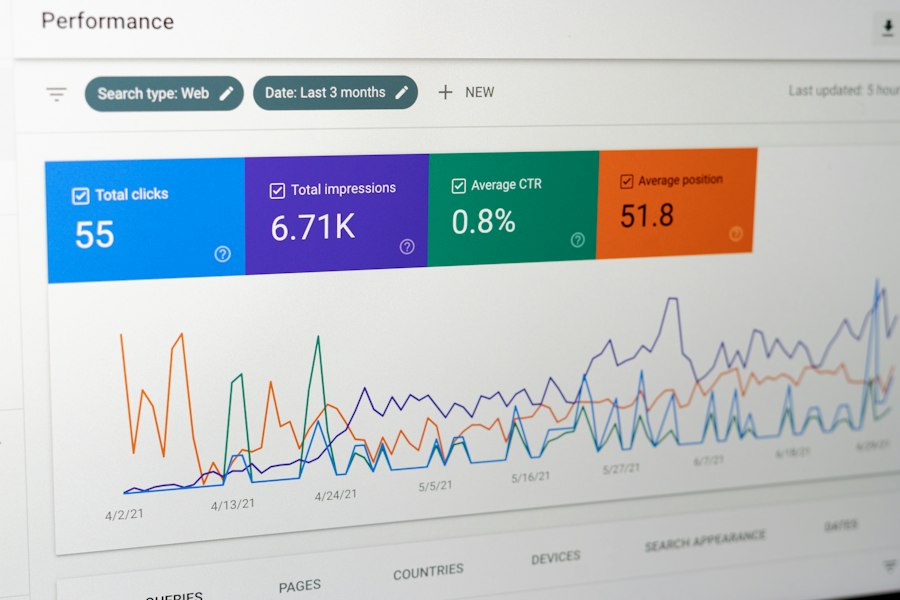
Tools like Google Search Console can give you ideas by showing actual queries. Keyword research tools, used thoughtfully, can also hint at common entities by showing clusters of related keywords. Brainstorming and creating an actual list or even a simple mind map can be very effective here. For example, if you sell specialty coffee, your core entities might include “arabica beans,” “single origin coffee,” “espresso machine,” “barista training,” “fair trade coffee,” “Ethiopian Yirgacheffe,” etc.
Comprehensive Entity Coverage in Content
Once you’ve identified your entities, the goal is to cover them comprehensively and accurately within your content. This isn’t about listing them out; it’s about integrating them naturally and providing depth.
- Define and Explain: If you introduce an important entity, briefly define or explain it, especially if it might be unfamiliar to part of your audience. This helps both users and search engines.
- Attributes and Properties: Go beyond just mentioning an entity. What are its key attributes? For “iPhone 15,” attributes might include “A17 Bionic chip,” “Dynamic Island,” “Ceramic Shield,” “USB-C.” These attributes are themselves often entities or relate directly to them.
- Relationships: Crucially, show how entities relate to each other. “Apple (organization) manufactures iPhone 15 (product).” “Steve Jobs (person) co-founded Apple (organization).” “Espresso (beverage) is prepared using an espresso machine (equipment).” These relationships are gold for knowledge graphs.
- Contextual Relevance: Ensure that the entities you include are relevant to the overall topic of your content. Don’t force them in. The goal is to build a rich, interconnected understanding, not a keyword-stuffing exercise in disguise.
Using Structured Data (Schema Markup)
Structured data is a direct way to communicate entities and their relationships to search engines. It’s essentially a standardized format for marking up information on your web page so that search engines can easily understand it.
- Schema.org Vocabulary: This is the universal vocabulary for structured data. It provides types (like
Person,Organization,Product,Article) and properties (likename,description,url,author,brand). - JSON-LD: This is the recommended format for implementing structured data. It’s a JavaScript notation embedded directly in your HTML, separate from the visible content, making it clean and easy to manage.
- Key Schemas for Entity Optimization:
Organization: For your business, includingname,logo,url,sameAslinks to social profiles.Product: For individual products, withname,image,description,sku,brand,offers(price, availability).Person: For authors, key team members, or individuals discussed in content.Article/BlogPosting: For blog posts and articles, specifyingheadline,author,datePublished,publisher, and image.LocalBusiness: For physical locations, includingaddress,telephone,openingHours.FAQPage: For question-and-answer content, where each question and answer pair can be an entity relationship.
Implementing structured data not only helps search engines understand your entities better but also increases your chances of appearing in rich results (e.g., product carousels, FAQ snippets, knowledge panels), which greatly enhance visibility and click-through rates.
Semantic SEO and Topical Authority
Entity optimization is deeply intertwined with semantic SEO and the concept of topical authority. It’s about demonstrating a comprehensive understanding of a topic, not just scattering relevant keywords throughout your content.
Beyond Keywords: Semantic Relationships
Semantic SEO focuses on the meaning and relationships between words, phrases, and concepts. When you optimize for entities, you’re inherently engaging in semantic SEO because entities represent these concepts. Instead of just trying to rank for “best coffee maker,” you’re building out content that covers the entity “coffee maker,” its types (“drip coffee maker,” “espresso machine,” “French press”), its components (“grinder,” “filter”), related entities (“coffee beans,” “barista”), and associated concepts (“brewing methods,” “coffee origin”).
This comprehensive approach helps search engines understand the full semantic context of your content, making it more likely to be deemed relevant for a wider range of related, nuanced queries.
What is Topical Authority?
Topical authority is essentially a measure of how comprehensively and expertly a website covers a particular topic or cluster of related entities. It’s not just about having a single high-ranking page; it’s about demonstrating deep, broad knowledge across an entire subject area.
Think of it like being an expert in a field. An expert doesn’t just know one fact; they understand the entire landscape, the history, the nuances, the related concepts, and the major players. Search engines are trying to identify these “experts” in the digital realm.
Building Topical Authority Through Entity Optimization
Entity optimization is the bedrock of building topical authority. Here’s how:
- Cover All Key Entities: Ensure your content addresses all significant entities within your niche. Don’t leave obvious gaps. If you talk about “electric vehicles,” you should also cover “charging infrastructure,” “battery technology,” “Tesla,” “Rivian,” “EV incentives,” etc.
- Demonstrate Relationships: Show how these entities connect. “Tesla (organization) manufactures electric vehicles (product category), which rely on battery technology (entity) for power, and benefit from charging infrastructure (entity).”
- Depth and Breadth: Don’t just mention entities; provide meaningful information about them. Create detailed guides, compare entities, discuss their history, evolution, and future.
- Entity-Centric Content Hubs: Consider creating content hubs or pillar pages that serve as comprehensive resources for a broad topic. These pages can then link out to more specific sub-pages that delve into individual entities or sub-topics, all interconnected. This structured approach helps both users navigate and search engines understand the hierarchy and relationships of your content.
- External Links to Authoritative Entities: When you link out to highly authoritative sources that further elaborate on an entity, you’re not just providing a good user experience; you’re also signaling to search engines that you understand the broader entity landscape and can contextualize your content within it.
The Role of Knowledge Graphs and AI
Understanding the underlying mechanisms that drive entity optimization – namely knowledge graphs and AI – helps us better strategize our content.
Google’s Knowledge Graph and Beyond
Google’s Knowledge Graph is a foundational component of its search engine, launched in 2012. It’s a vast repository of facts about entities and their relationships, gathered from various sources (Wikipedia, Wikidata, reputable databases, etc.). When you see knowledge panels on the right side of search results or direct answers to factual questions, that information is often pulled directly from the Knowledge Graph.
Other search engines and AI systems also maintain their own versions of knowledge graphs or semantic networks. These graphs allow them to:
- Understand Context: Disambiguate queries (e.g., “apple” the fruit vs. “Apple” the company).
- Answer Factual Questions Directly: Provide concise answers without requiring users to click through to a website.
- Connect Disparate Information: Show relationships between entities that might not be explicitly stated on a single web page.
- Enhance Recommendations: Power features like “People also ask” and “Related searches.”
For SEO, the implication is clear: if your content and website’s structure align with how these knowledge graphs organize information, you stand a much better chance of being understood, ranked, and featured.
AI and Natural Language Understanding (NLU)
The advancements in AI, particularly in Natural Language Understanding (NLU) and Natural Language Processing (NLP), are what make entity optimization so critical today. Models like BERT, MUM, and their successors enable search engines to:
- Identify Entities in Text: Accurately pick out people, places, organizations, and concepts from unstructured text.
- Understand Sentiment and Tone: Gauge the overall feeling or perspective expressed about an entity.
- Recognize Intent: Determine the underlying goal of a user’s query, even if the phrasing is ambiguous.
- Extract Relationships: Identify how entities interact or relate to each other within a sentence or document.
- Generate Summaries and Answers: Condense complex information about entities into succinct responses for rich snippets or AI-driven chat interfaces.
This means that keyword density is far less important than the overall semantic completeness and accuracy of your content regarding relevant entities. AI wants to “understand” your content as a human would, and entity understanding is central to that.
Future Implications: Generative AI and Search
The rise of generative AI, exemplified by tools like ChatGPT and Google’s Bard (now Gemini), is further solidifying the importance of entity optimization. These models don’t just find information; they synthesize and generate it.
- Search Generative Experience (SGE): Google’s experiments with SGE show a future where search results might often start with an AI-generated summary or answer, drawing information from various sources and synthesizing it around identified entities. For your content to be included in these summaries, it needs to be highly authoritative and clearly understood at an entity level.
- Fact-Checking and Attribution: Generative AI relies on robust, accurate information about entities. Websites that provide clear, well-structured, and verifiable information about entities are more likely to be trusted and cited by these AI systems.
- Beyond Traditional SERPs: As AI integrates deeper into search and other applications (voice assistants, chatbots), optimizing for entities ensures your content is accessible and understandable across a wider range of information retrieval methods, not just the traditional 10 blue links.
Practical Steps to Get Started with Entity Optimization
| Metric | Description | Impact on SEO | Measurement Method |
|---|---|---|---|
| Entity Relevance Score | Degree to which content aligns with targeted entities | Higher scores improve search ranking and topical authority | Semantic analysis tools and NLP algorithms |
| Entity Connectivity | Number of meaningful links between entities within content | Enhances contextual understanding and boosts SEO | Graph analysis of entity relationships |
| Structured Data Implementation | Use of schema markup to define entities | Improves search engine comprehension and rich results eligibility | Schema validators and Google Rich Results Test |
| Entity Coverage | Extent of relevant entities covered in content | Broader coverage increases topical depth and ranking potential | Content audits and entity extraction tools |
| Search Intent Alignment | Match between entities and user search intent | Better alignment leads to higher click-through rates and engagement | User behavior analytics and intent classification |
| Entity Authority | Credibility and trustworthiness of entities referenced | Higher authority entities improve content trust and ranking | Domain authority metrics and citation analysis |
It might sound complex, but integrating entity optimization into your SEO workflow can be done incrementally. Here are some actionable steps:
1. Conduct a Content Audit from an Entity Perspective
Review your existing content.
- What entities are you currently covering? Make a list for each major piece of content.
- Are these entities fully explained and contextualized? Or are they just mentioned?
- What important entities are missing? Identify gaps in your content coverage.
- Are relationships between entities clear? Do you explicitly state how one entity relates to another?
This audit will reveal where your content is strong and where it needs expansion to become more entity-rich.
2. Deepen Your Entity Research
Go beyond basic keyword research.
- Use knowledge panels: When you search for an entity in Google, look at the knowledge panel. What attributes and related entities does it highlight? This is Google’s understanding of that entity.
- Explore “People also ask” and “Related searches”: These sections often reveal common questions and related entities that users are interested in.
- Leverage Wikipedia/Wikidata: These are vast knowledge bases of entities and their relationships. They can be excellent sources for understanding the breadth and depth of a topic.
- Utilize semantic SEO tools: Some tools now help identify related entities and semantic topics for your content.
3. Enhance Content with Entity Information
When creating new content or updating old, think entities.
- Comprehensive Definitions: When introducing an important entity, provide a clear, concise definition.
- Attributes and Characteristics: Describe the key features, properties, or characteristics of the entity.
- Historical Context: If relevant, include the history or evolution of an entity.
- Relationships to Other Entities: Explicitly state how the current entity connects to other relevant entities (e.g., “This product was developed by [Organization Entity] and is used by [Person Entity] for [Purpose Entity]”).
- Answer Common Questions: Address the “who, what, where, when, why, how” questions related to your entities.
4. Implement Structured Data Strategically
Don’t just add generic schema. Focus on entities relevant to your business.
- Identify High-Value Entities: Which entities are most critical for your business (your products, services, organization, key people)? Prioritize these.
- Use the Right Schema Types: Apply
Organization,Product,Service,Person,Article,LocalBusiness,FAQPage,Review,Event, etc., where appropriate. - Populate Properties Thoroughly: Don’t just include the name. Fill in as many relevant properties as possible (e.g.,
image,description,sameAs,brand,creator,publisher,offers,aggregateRating). - Validate Your Schema: Use Google’s Rich Results Test and Schema.org Validator to ensure your markup is correct and understood.
5. Build Internal and External Link Relationships
Links aren’t just for passing “link juice”; they help define relationships between entities.
- Internal Linking: Link relevant pages to each other when they discuss related entities. This creates a semantic network on your site, showing search engines the relationships within your content. For example, if you have an article about “Types of Coffee Beans,” link from there to an article about “Brewing Methods” and “Coffee Grinders.”
- External Linking: Link out to authoritative sources when referencing an entity or concept that is not fully explained on your site. This adds credibility and helps search engines connect your content to the broader web of entities.
By consistently applying these principles, you’ll be building a more robust, authoritative, and understandable web presence for today’s AI-driven search engines. It’s not a radical overhaul, but a natural refinement of good SEO practices for an evolving digital landscape.