

You know how smart contracts are supposed to be these automated agreements that run themselves once certain conditions are met on the blockchain? Well, AI is starting to make that execution process even more streamlined and efficient. Instead of just passively waiting for triggers, AI is actively helping to manage, monitor, and even optimize how these contracts behave.
Think of it like this: a smart contract is a vending machine. You put in your money (crypto), select your item, and it dispenses. AI is like the person who checks the machine’s stock, notices it’s low on your favorite snack and proactively orders more, or even reroutes your request to another nearby machine if yours is malfunctioning. It’s not just about the core function, but the intelligence behind ensuring it works smoothly and effectively.
So, how exactly is AI making this happen? It’s a growing field, but we’re seeing AI step in to handle a lot of the complex, behind-the-scenes work that ensures smart contracts don’t just exist, but actively do what they’re meant to do, reliably.
One of the most immediate applications of AI in smart contract execution is in monitoring. Smart contracts, by their nature, are designed to be immutable once deployed. This means if there’s a bug or an unexpected behavior, it can be hard to fix. AI helps by acting as a vigilant supervisor, constantly watching how a contract is performing.
Real-time Performance Analysis
AI algorithms can process vast amounts of transaction data flowing through a smart contract in real-time. This goes beyond simply checking if a transaction was successful or failed. AI can analyze patterns, transaction volumes, gas fees, and execution times to identify deviations from expected norms.
Identifying Performance Bottlenecks
For example, if a smart contract is used in a decentralized exchange (DEX), AI can flag when transaction confirmation times start to significantly increase, or when the cost of executing common trade functions spikes unexpectedly. This could indicate network congestion, a growing load on the contract itself, or even an attempt to exploit a performance quirk.
Detecting Unusual Transaction Patterns
AI can learn what “normal” trading behavior looks like for a particular smart contract. If a sudden surge of very small, rapid transactions hits a liquidity pool contract, or if a large number of failed transactions start occurring from a specific set of addresses, AI can flag this as anomalous. This doesn’t automatically mean malpractice, but it’s a strong signal for human oversight or automated remediation.
Security Anomaly Detection
Beyond just performance, AI is proving invaluable in identifying potential security threats to smart contracts. The immutability of blockchains means that once a vulnerability is exploited, it can be very difficult to reverse. AI acts as an early warning system.
Behavioral Analysis of Contract Interactions
AI can build profiles of typical user interactions with a smart contract. If a series of transactions starts to exhibit behavior that deviates from these learned patterns—for instance, attempting to interact with the contract in a way that’s never been done before or trying to access functions out of sequence—AI can flag it. This could be an indicator of an attempted exploit.
Detecting Reentrancy Attacks and Other Exploits
While smart contract code is often audited, sophisticated attacks can sometimes slip through. AI can analyze the state changes within a contract during transaction execution. If it detects patterns that are characteristic of known attack vectors, like reentrancy (where a contract calls itself before it finishes its previous execution), it can alert operators or even trigger circuit breakers.
Predictive Vulnerability Assessment
Advanced AI models can even be trained on data from past smart contract exploits. By analyzing the code and transactional data that led to those failures, AI can potentially identify similar vulnerable patterns in currently deployed contracts, even if they haven’t been exploited yet.
In exploring the intersection of technology and finance, a related article discusses an innovative approach to cryptocurrency mining within electric vehicles, specifically focusing on how a Tesla owner has built a cryptocurrency mining rig in his Model S. This development highlights the growing trend of integrating blockchain technology with everyday devices, which complements the discussion on how AI is automating the execution of blockchain smart contracts. For more insights on this unique application of technology, you can read the article here: Tesla Owner Builds Cryptocurrency Mining Rig in His Model S.
AI for Optimizing Smart Contract Execution
Once a smart contract is deployed, its execution is often subject to the underlying blockchain’s network conditions and the contract’s own internal logic. AI can play a role in making this execution more efficient and cost-effective.
Gas Fee Optimization
Gas fees are the transaction costs on many blockchains, and they can fluctuate wildly. AI can help smart contract users and developers navigate this landscape more effectively.
Predicting Gas Price Fluctuations
By analyzing historical gas price data, network congestion metrics, and even sentiment analysis from social media related to blockchain activity, AI models can predict short-term gas price movements. This allows smart contract applications to schedule transactions for periods when gas fees are likely to be lower.
Dynamic Transaction Submission
Instead of submitting a transaction at a fixed gas price, an AI-powered system can dynamically adjust the gas price based on real-time network conditions and the urgency of the transaction. If a transaction is not time-sensitive, the AI can wait for lower fees. If it’s critical, it might bid higher, but it does so with an informed prediction.
Resource Allocation and Throughput Management
In decentralized applications (dApps) that rely on numerous smart contract interactions, AI can help manage resources and improve overall throughput.
Intelligent Transaction Queuing
For dApps that handle a high volume of user requests, AI can intelligently queue transactions. It can prioritize critical operations, batch less urgent ones, or even route transactions to different nodes or networks (if applicable) to optimize processing speed and reduce load on individual parts of the system.
Load Balancing for Smart Contract Interactions
If a dApp’s backend services interact with multiple instances of a smart contract or different smart contracts, AI can implement intelligent load balancing. This ensures that no single contract or service is overwhelmed, distributing the workload to maintain stable performance and timely execution.
AI-Assisted Smart Contract Creation and Development
While the core question is about execution, AI’s role in the development lifecycle directly impacts how well a smart contract will execute. By helping developers write better, more secure, and more efficient code from the outset, AI minimizes future execution problems.
Code Generation and Optimization
AI tools are emerging that can assist developers in writing smart contract code. This isn’t about AI replacing developers entirely, but rather acting as a powerful co-pilot.
Generating Boilerplate Code and Standard Functions
AI can quickly generate common smart contract structures, data storage patterns, and standard functions (like ERC-20 token implementations), saving developers significant time and reducing the chance of manual errors in these routine parts of the code.
Suggesting Code Improvements for Efficiency
As AI models become more sophisticated, they can analyze existing smart contract code and suggest optimizations for gas efficiency or execution speed. This could involve recommending different data structures, more efficient algorithms, or even highlighting potential areas where gas costs can be reduced without sacrificing functionality.
Vulnerability Detection during Development
Integrating AI directly into the development workflow allows for early identification of potential security flaws.
Static Code Analysis with AI
AI can perform more advanced static code analysis than traditional linters. It can learn from vast datasets of buggy and secure smart contracts to identify subtle logical flaws, potential vulnerabilities, and common coding mistakes that human developers might overlook.
Fuzzing and Property-Based Testing Enhancement
AI can enhance smart contract testing methodologies like fuzzing (generating random inputs to find bugs) by intelligently guiding the fuzzing process. Instead of purely random inputs, AI can generate more targeted inputs based on its understanding of typical contract usage and known vulnerability patterns, leading to more efficient bug discovery.
AI for Smart Contract Orchestration and Workflow Management
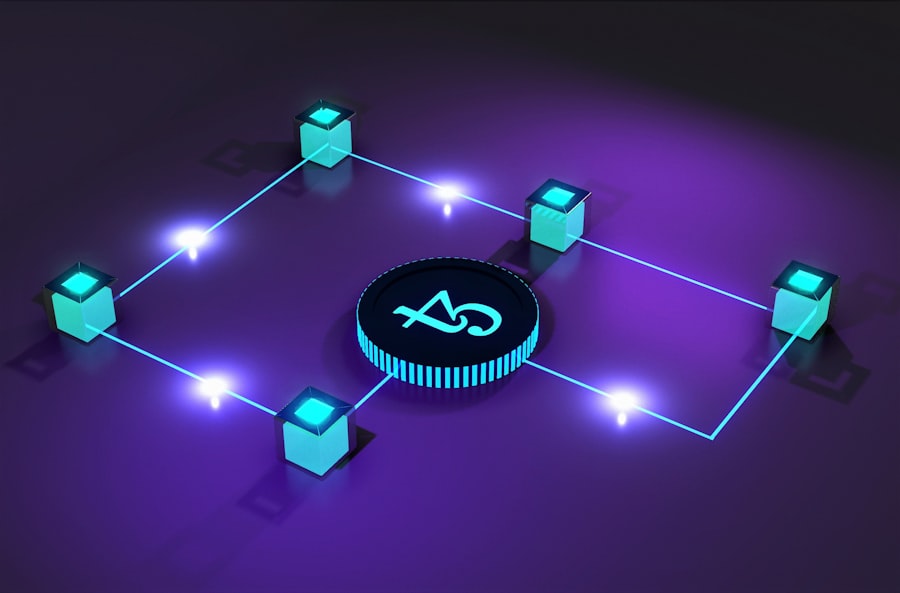
Many real-world applications of smart contracts involve complex sequences of operations involving multiple parties or multiple contracts. AI can help orchestrate these intricate workflows.
Automated Workflow Initiation and Progression
Think of a supply chain where multiple smart contracts govern stages of product movement and payment. AI can automate the triggering of these subsequent contracts based on verified outcomes.
Condition Verification and Triggering
AI can analyze on-chain and off-chain data feeds (e.g., GPS data, IoT sensor readings, verified completion of a service) to confirm if the conditions for the next stage of a smart contract have been met. Once verified, AI can trigger the execution of the next smart contract in the sequence.
Coordination Across Multiple Contracts and Blockchains
For complex decentralized finance (DeFi) strategies or multi-party agreements, AI can manage the interactions between various smart contracts, potentially even across different blockchain networks if interoperability solutions are in place. This ensures that complex operations proceed smoothly and in the correct order.
Intelligent Decision Making within Contracts
In some advanced scenarios, AI itself can be embedded within or interact with smart contracts to make real-time decisions that influence execution.
Dynamic Parameter Adjustment
An AI model within a decentralized lending protocol, for example, could continuously monitor market conditions and automatically adjust interest rates or collateralization ratios to maintain protocol stability, triggering the relevant smart contract functions to implement these changes.
Risk Management and Automated Responses
AI can be deployed to monitor financial risks within a decentralized autonomous organization (DAO) or a DeFi protocol. If AI detects an unacceptable risk level, it can automatically trigger pre-configured smart contract functions to mitigate that risk, such as pausing trading or liquidating certain assets.
The integration of artificial intelligence in the automation of blockchain smart contracts is transforming the way transactions are executed in the digital landscape. For those interested in understanding the broader implications of blockchain technology, a related article provides valuable insights into Bitcoin and its foundational role in this ecosystem. You can explore this further in the article titled A Bitcoin Guide, which delves into the intricacies of cryptocurrency and its connection to smart contracts.
Integration of AI and Oracles for Enhanced Execution
Smart contracts often need information from the outside world to execute correctly. This is where oracles come in, and AI is enhancing this connection.
Intelligent Data Sourcing and Verification
Oracles bridge the gap between blockchains and real-world data. AI can make this process more robust and reliable.
AI-Powered Data Aggregation
Instead of relying on a single oracle feed, AI can aggregate data from multiple reputable oracle providers. It can then use AI techniques to cross-reference and validate these disparate data points, determining the most accurate consensus value.
Anomaly Detection in Oracle Feeds
AI can monitor oracle data streams for anomalies or inconsistencies that might indicate manipulation or sensor failure. If an oracle feed provides data that is significantly outside the expected range or historical norm, AI can flag it or ignore it in favor of more reliable sources.
Predicting Data Availability and Latency
AI can analyze historical oracle performance and network conditions to predict when specific data feeds will be available and at what latency. This allows smart contract applications to be designed to handle potential delays or to prioritize data from more consistently available sources.
Bridging Off-Chain AI Models to On-Chain Execution
The most cutting-edge applications involve using AI models that run off-chain to inform on-chain smart contract execution.
Securely Passing AI Model Outputs to Smart Contracts
This is a significant technical challenge, as smart contracts are deterministic and operate in a trustless environment. AI outputs can be complex and potentially non-deterministic. Secure mechanisms are needed to ensure that the results of an off-chain AI model are accurately and trustworthily provided to a smart contract. This often involves trusted execution environments or multi-party computation.
Triggering Smart Contracts Based on AI Predictions
Imagine an AI model predicting the price of an asset with high confidence. This prediction, once verified and passed through secure oracle mechanisms, could trigger a smart contract to execute a trade, rebalance a portfolio, or adjust risk parameters. The AI makes the prediction, and the smart contract executes the action based on that prediction.
In essence, AI isn’t just a buzzword here; it’s becoming a practical tool to make smart contracts more robust, secure, and efficient. From keeping a watchful eye on them to optimizing their costs and even helping to build them better, AI is quietly revolutionizing how automated blockchain agreements function.
