

Decentralized GPU networks are essentially a new way to share computing power, and they’re becoming a big deal because they’re directly fueling the current AI boom. Think of it like this: AI models, especially the really advanced ones like large language models and image generators, need an enormous amount of processing power – specifically from Graphics Processing Units (GPUs) – to be trained and run. Traditionally, this power came from big tech companies or dedicated data centers. But now, decentralized networks are opening up access to this crucial resource, making AI development more accessible and, in many cases, more affordable. This shift is a game-changer, democratizing innovation and accelerating the pace at which new AI applications can be brought to life.
AI’s insatiable demand for GPUs isn’t just a fad; it’s fundamental to how these powerful systems operate. Understanding this demand is key to appreciating the role of decentralized networks.
Parallel Processing Power
The core reason GPUs are so vital for AI lies in their ability to perform parallel processing. Unlike a traditional CPU, which is designed for sequential tasks, a GPU has thousands of smaller cores that can execute many computations simultaneously.
- Vector and Matrix Operations: AI, particularly deep learning, heavily relies on complex mathematical operations involving vectors and matrices (think of them as large arrays of numbers). These operations are perfectly suited for parallel execution, where individual calculations can be performed on different GPU cores at the same time.
- Neural Network Training: Training a neural network involves adjusting millions, sometimes billions, of parameters through a process called backpropagation. Each adjustment requires numerous calculations. GPUs can handle these computations in parallel across all the layers of a network, drastically speeding up the training process compared to a CPU.
Scarcity and Cost of High-End GPUs
While essential, high-end GPUs are neither cheap nor readily available. This scarcity creates a significant barrier to entry for many AI developers and researchers.
- Manufacturing Constraints: The production of advanced GPUs is a complex process dominated by a few key players. Supply chain issues, raw material availability, and highly specialized manufacturing techniques can limit output.
- High Upfront Investment: A single top-tier data center GPU can cost tens of thousands of dollars. Building a cluster of these GPUs for serious AI development requires a massive upfront capital expenditure that many startups, individuals, or smaller research institutions simply cannot afford.
- Operational Expenses: Beyond the purchase price, running these powerful GPUs incurs substantial electricity costs, cooling requirements, and maintenance, adding to the overall expense.
In exploring the transformative impact of decentralized GPU networks on the AI boom, it’s also insightful to consider the broader implications of cryptocurrency market dynamics. A related article discusses how the cryptocurrency market cap has recently hit a record $200 billion, highlighting the growing intersection between blockchain technology and various sectors, including artificial intelligence. For more details, you can read the full article here: Cryptocurrency Market Cap Hits Record $200 Billion.
How Decentralized GPU Networks Work
Decentralized GPU networks are built on the principle of sharing. They connect individuals and organizations with idle GPU capacity to those who need it, often leveraging blockchain technology to manage transactions and ensure trust.
Pooling Distributed Resources
At its heart, a decentralized GPU network is a marketplace for computing power.
- Providers: Individuals or entities who own GPUs (from gaming PCs to professional workstations or even small data centers) can register their hardware with the network. They essentially “rent out” their idle processing power.
- Consumers: AI developers, researchers, or companies needing GPU compute can then access this pooled capacity. They submit their AI workloads (e.g., training a model, running an inference task) to the network.
- Matchmaking and Allocation: The network’s protocol handles the matchmaking, connecting consumers with available providers whose GPUs meet the workload’s specific requirements (e.g., memory, core count).
Blockchain and Smart Contracts for Trust
Blockchain technology plays a crucial role in making these networks trustworthy and efficient without a central authority.
- Secure Transactions: When a consumer wants to use a GPU, they pay for the service using cryptocurrency. This transaction is recorded on the blockchain, providing a transparent and immutable record.
- Automated Payments with Smart Contracts: Payment to providers is often handled automatically via smart contracts. Once a workload is successfully completed and verified, the smart contract releases payment to the GPU owner. This removes the need for manual invoicing or third-party escrow services.
- Reputation Systems: Some networks incorporate reputation systems, also managed on the blockchain, to help consumers choose reliable providers and incentivize providers to offer consistent, high-quality service. This might track uptime, successful job completion rates, and dispute resolution history.
- Decentralized Verification: Ensuring that a job was actually completed correctly and efficiently is another area where decentralized verification mechanisms, often powered by cryptography and consensus algorithms, come into play. This prevents malicious providers from falsely claiming payment for uncompleted or incorrect work.
Economic Incentives for Sharing
The success of these networks hinges on creating a compelling economic model for both sides.
- For Providers: Earning income from otherwise idle hardware is a strong incentive. Many GPU owners have powerful cards that aren’t running at 100% capacity all the time. Renting them out provides a passive income stream.
- For Consumers: Access to a potentially more affordable and flexible alternative to traditional cloud providers is a major draw. They can spin up GPU resources on demand without large upfront investments or long-term commitments.
- Competitive Pricing: The decentralized nature encourages competition among providers, potentially driving down prices for GPU compute compared to centralized cloud services.
Advantages Over Traditional Cloud Computing
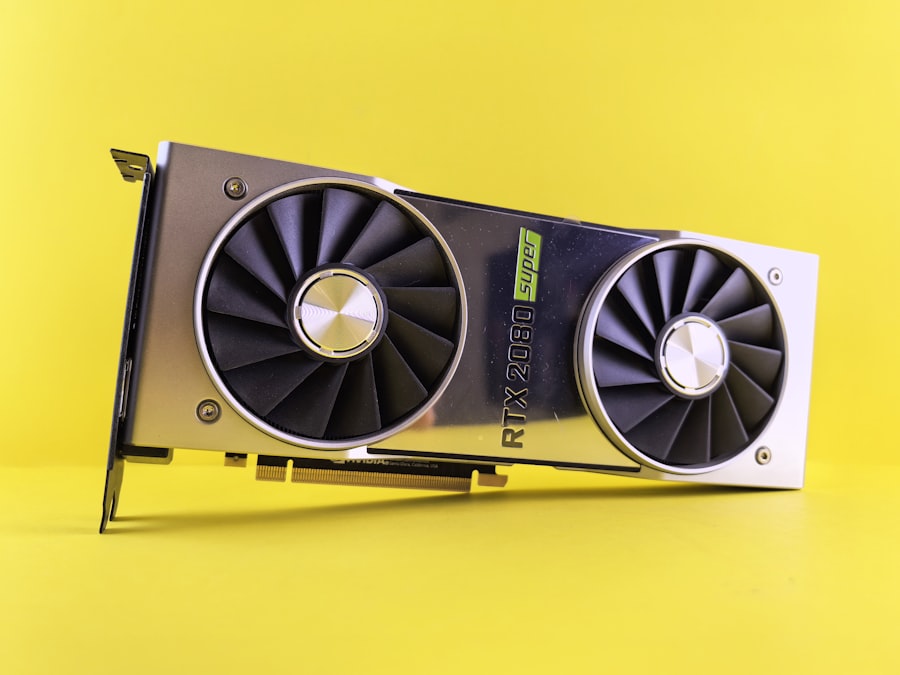
While traditional cloud providers like AWS, Google Cloud, and Azure offer GPU instances, decentralized networks bring several distinct advantages to the table, especially for AI workloads.
Reduced Costs and Accessibility
This is arguably the biggest selling point for many users.
- Lower Overhead: Centralized cloud providers have significant overheads: massive data centers, extensive marketing, and large workforces. Decentralized networks leverage existing hardware, cutting down on these costs.
- No Upfront Investment: Users can access high-end GPUs without the capital expenditure of buying hardware or committing to long-term cloud contracts.
- Pay-as-You-Go Flexibility: Most decentralized networks offer true pay-as-you-go pricing, often down to the minute or even second, allowing for granular control over spending.
- Democratization of AI: By lowering the financial barrier, these networks make advanced AI development accessible to a wider range of individuals, startups, and academic institutions that might otherwise be priced out. This fosters innovation from diverse sources.
Greater Resource Availability and Variety
Decentralized networks tap into a vast, global pool of hardware.
- Global Pool: Unlike a few centralized data centers, decentralized networks can draw on GPUs from around the world, potentially offering better availability, especially during peak demand.
- Diverse Hardware: They can offer a wider variety of GPU models and configurations than a single cloud provider might. This can be beneficial for specific AI tasks that might perform better on certain architectures.
- Reduced Regional Bottlenecks: If a specific cloud region is experiencing high demand or outages, a decentralized network can often route tasks to available GPUs elsewhere, improving resilience.
Enhanced Privacy and Security (in some cases)
While not universally true for all decentralized GPU networks, many aim to improve privacy and security aspects.
- No Central Point of Failure: Without a single central server managing all data and requests, the risk of a single point of attack or failure is reduced.
- Data Locality: Depending on the network’s design, users might have more control over where their data is processed, which can be important for compliance or privacy sensitive applications. Some networks are exploring confidential computing solutions.
- Reduced Censorship Risk: In theory, a decentralized network is less susceptible to censorship or arbitrary service termination by a single entity.
- Anonymity for Providers: GPU providers can participate in the network often with a degree of anonymity, though workload and payment verification still occur.
Challenges and Considerations for Adoption
While promising, decentralized GPU networks are still evolving and face several hurdles before widespread, mainstream adoption. Addressing these challenges is crucial for their long-term success.
Performance and Reliability Concerns
Ensuring consistent performance and reliability across a network of disparate hardware is a significant technical challenge.
- Variable Hardware Quality: The performance of consumer-grade GPUs can vary significantly. A network needs mechanisms to benchmark and rate provider hardware to ensure a minimum quality of service for consumers.
- Network Latency: Data transfer to and from widely distributed GPUs can introduce latency, which might be an issue for time-sensitive AI inference tasks. Training jobs, however, are often less sensitive to this.
- Uptime Guarantees: Unlike a cloud provider that offers SLAs (Service Level Agreements), guaranteeing a provider’s uptime in a decentralized network is harder. Incentive mechanisms and reputation systems are designed to mitigate this, but unexpected disconnects can still occur.
- Security of Workloads: Consumers need assurance that their AI models and data are secure when processed on third-party hardware. Secure execution environments and data encryption are areas of active development.
Technical Complexity and User Experience
For widespread adoption, these networks need to be as easy to use as traditional cloud services.
- Onboarding Providers: Making it easy for anyone to share their GPU without requiring deep technical knowledge is key. Simplified software and clear instructions are essential.
- Consumer Workflow Integration: AI developers are accustomed to specific tools and environments. Decentralized networks need to integrate seamlessly with common AI frameworks (TensorFlow, PyTorch) and development workflows.
- Troubleshooting and Support: Debugging problems across a distributed network can be complex. Effective support channels and clear diagnostic tools are necessary.
- Cryptocurrency Barriers: Many networks require payment in specific cryptocurrencies, which can be a barrier for users unfamiliar with crypto wallets, exchanges, and volatile asset prices. Abstraction layers that allow fiat payments are emerging.
Regulatory and Legal Landscape
The decentralized nature of these networks introduces complex questions regarding regulation and jurisdiction.
- Data Sovereignty: With GPUs located in various countries, data processed on these networks might cross international borders, raising questions about data protection laws (like GDPR) and data sovereignty.
- Compliance: For industries with strict compliance requirements (e.g., healthcare, finance), ensuring that decentralized GPU usage meets regulatory standards will be a major hurdle.
- Intellectual Property: Who owns the intellectual property of an AI model trained on a decentralized network? Clear terms of service and legal frameworks will be needed to address such questions.
- Taxation: The tax implications for both GPU providers (earning income from their hardware) and consumers (paying for services) in a global, decentralized system are still being worked out by tax authorities.
The rise of decentralized GPU networks is not only transforming the landscape of artificial intelligence but also influencing other sectors, including cryptocurrency mining. For instance, an intriguing article discusses how a Tesla owner has ingeniously built a cryptocurrency mining rig within his Model S, showcasing the innovative ways individuals are leveraging technology for mining purposes. This intersection of AI and cryptocurrency can be explored further in the article found here.
The Future: AI Democratization and Beyond
Despite the challenges, the trajectory for decentralized GPU networks points towards a transformative role in the AI landscape, fundamentally changing how AI is developed and deployed.
Accelerating AI Research and Development
The most immediate impact will be on the speed and scope of AI innovation.
- More Experimentation: Lower costs allow researchers and developers to run more experiments, test more hypotheses, and iterate faster on their models.
- Open-Source AI: Decentralized networks provide accessible compute for training open-source models, fostering a more collaborative and transparent AI development ecosystem.
- Long-Tail AI Applications: Many niche AI applications that wouldn’t warrant the expense of dedicated compute or large cloud instances can become viable thanks to the affordability of decentralized networks.
- Faster Model Deployment: The ability to quickly spin up inference capacity on demand means that newly trained models can be deployed and served to users more rapidly.
Enabling New Business Models and AI Services
Decentralized compute opens doors for novel services and entrepreneurial ventures.
- AI Microservices: Small, specialized AI models can be hosted and served efficiently on these networks, allowing developers to build complex applications by composing multiple microservices.
- Decentralized AI Agents: Autonomous AI agents that require on-demand compute could leverage these networks, paying for resources as needed without relying on a central authority.
- Personalized AI: The ability to train or fine-tune models more privately and affordably could lead to highly personalized AI experiences without centralizing user data.
- AI as a Utility: Imagine AI compute becoming as ubiquitous and accessible as electricity, where anyone can plug into a vast, global network of processing power on demand.
The Rise of Edge AI and Federated Learning
Decentralized networks align well with emerging trends in AI like edge computing and federated learning.
- Edge Inference: For low-latency AI inference at the “edge” (e.g., smart devices, IoT sensors), decentralized nodes closer to the data source can provide faster response times than centralized cloud data centers.
- Federated Learning on Decentralized Nodes: Federated learning trains models on decentralized datasets without moving the raw data. Decentralized GPU networks could provide the local computation needed at each data owner’s site, further enhancing data privacy and security.
- Reduced Data Transfer Costs: By processing data closer to its origin, these networks can reduce the amount of data that needs to be transferred to distant data centers, saving bandwidth and improving efficiency.
The integration of decentralized GPU networks into the AI ecosystem isn’t just about cost savings; it’s about fundamentally reshaping the landscape, fostering innovation from the ground up, and accelerating the pace at which AI transforms our world. While there are hurdles to overcome, the inherent advantages and the increasing demand for AI compute point to a future where these networks are not just an alternative, but a cornerstone of AI’s continued expansion.
