

So, you’re curious about AI-driven trading bots and whether they’re the magic bullet for your investments. Let’s get straight to it: while these bots offer incredible potential, they also come with some serious, often overlooked, risks. They aren’t a set-it-and-forget-it solution, and assuming they are can lead to significant financial headaches. This article will break down those hidden dangers so you can make more informed decisions.
It’s easy to see why AI trading bots are popular. The idea of a smart algorithm tirelessly working for you, free from human emotions, promises consistent profits and less stress. They can analyze vast amounts of data in milliseconds, spot patterns humans might miss, and execute trades with unparalleled speed. For many, it feels like the future of finance, and in some ways, it is. But that future isn’t as simple or risk-free as it often appears.
Speed and Efficiency: A Double-Edged Sword
- The Benefit: Bots can react to market changes faster than any human, potentially getting in or out of positions at optimal times. This efficiency is a huge draw, especially in volatile markets. They can scan hundreds of assets simultaneously and process news feeds instantly.
- The Risk: This speed can also amplify losses. If a bot makes a bad decision or encounters an unexpected market event, its rapid execution can quickly turn a small error into a substantial loss before a human could even react. Flash crashes, for instance, are often exacerbated by automated trading systems reacting to an initial dip.
Eliminating Emotional Trading: The Human Factor
- The Benefit: Emotions – greed, fear, hope – are notorious drivers of bad trading decisions. Bots, by their nature, are emotionless. This is often touted as one of their primary advantages, leading to more disciplined and logically driven trades based purely on programmed parameters.
- The Risk: While bots don’t have human emotions, they do reflect the biases and assumptions of their creators. If the underlying algorithm is flawed, based on incomplete historical data, or makes incorrect assumptions about future market behavior, it will execute flawed trades without a second thought. It’s an “emotionless garbage in, emotionless garbage out” scenario.
In exploring the complexities of AI-driven trading bots, it’s essential to consider the broader implications of technology in finance. A related article that delves into the potential for decentralization in payment systems is titled “Can Credit/Debit Card Payment System Become Completely Decentralized?” This piece discusses how advancements in technology could reshape traditional financial systems, much like AI is transforming trading practices. For more insights, you can read the article here: Can Credit/Debit Card Payment System Become Completely Decentralized?.
Data Dependence: The Foundation and Its Faults
AI models are only as good as the data they’re trained on. This isn’t just a cliché; it’s a fundamental vulnerability when it comes to financial markets.
Historical Data Traps: The Past Isn’t Always Prologue
- Backtesting Bias: Bots are typically developed and optimized by “backtesting” them against historical market data. While useful for refining strategies, this process has a significant flaw: it assumes future market behavior will mirror the past.
- Novel Market Conditions: Markets are constantly evolving. Geopolitical events, technological breakthroughs, regulatory changes, and economic shifts can create entirely new market dynamics that historical data simply doesn’t account for. A bot trained on pre-pandemic data, for example, might perform poorly in a post-pandemic world characterized by supply chain disruptions and surging inflation, simply because it hasn’t “seen” those conditions before. It’s akin to training a driving bot only on clear highways and then unleashing it in a blizzard.
- Overfitting: A critical backtesting issue is “overfitting,” where a bot becomes too optimized for past data, especially for specific, perhaps anomalous, historical events. While it might look incredible on paper during backtesting, it will likely perform terribly in real-time trading when those exact conditions don’t repeat.
Data Integrity and Availability: Garbage In, Garbage Out
- Flawed Data Feeds: AI bots rely on constant streams of market data. If these data feeds are corrupted, delayed, or incomplete – even momentarily – the bot can make erroneous decisions. Think about a bot designed to react to price changes, but the price feed lags by a few seconds during a fast-moving market; it could buy high or sell low based on outdated information.
- Spoofing and Manipulation: Financial markets are not immune to manipulation. Sophisticated actors can use tactics like spoofing (placing large orders to create artificial demand/supply and then canceling them) to trick algorithms. A bot designed to react to order book depth could be fooled by such maneuvers.
- Data Gaps: Sometimes, data simply isn’t available for certain assets or during periods of extreme volatility (e.g., flash crashes where exchanges temporarily halt trading or struggle to disseminate real-time prices). How the bot is programmed to handle these gaps can be critical, and often, the default behavior isn’t ideal.
Algorithmic Fragility: When the Program Itself Becomes a Problem
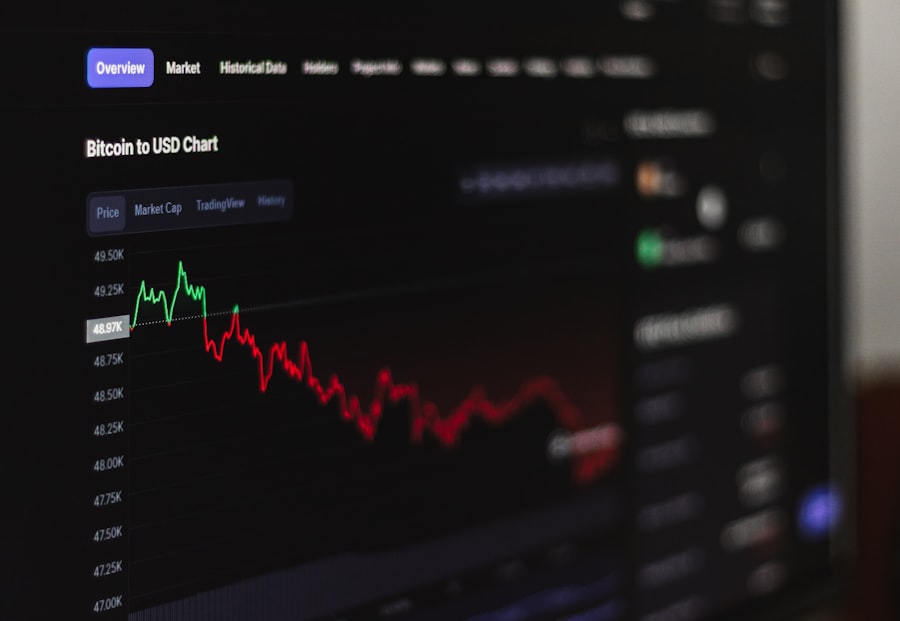
Beyond the data, the code and logic underpinning the AI bot itself can harbor significant risks. These aren’t just minor bugs; they can be fundamental flaws in how the bot perceives and interacts with the market.
Black Box Syndrome: Understanding the “Why”
- Lack of Interpretability: Many advanced AI models, especially deep learning networks, are “black boxes.” This means that while they might produce a trading decision, it’s incredibly difficult for humans to understand why that decision was made. The internal workings are too complex to easily decipher.
- Debugging Difficulties: If a bot starts performing poorly, diagnosing the exact cause can be a nightmare. Is it faulty data? A market shift? A subtle bug in the code? Or has the AI simply developed an unexpected, inefficient strategy? Without interpretability, fixing the problem becomes a painstaking, trial-and-error process, often leading to more losses in the interim.
- Loss of Control: Relying on a black-box bot fundamentally means relinquishing a degree of control. You might see the “what,” but not the “why,” making it challenging to intervene intelligently or adapt the strategy.
Over-Optimization and Brittle Strategies: Too Good To Be True
- Parameter Sensitivity: Trading bots often have numerous adjustable parameters (e.g., lookback periods for indicators, thresholds for entry/exit). Through extensive optimization, these parameters can be fine-tuned to yield excellent results on historical data. However, if these parameters are too finely tuned, they can become extremely sensitive. Even a slight shift in market conditions can cause the strategy to break down completely.
- Lack of Robustness: A robust strategy performs well across a wide range of market conditions. Brittle strategies, on the other hand, are highly specialized and perform poorly outside of a narrow set of circumstances. Often, AI bots are accidentally optimized into brittle strategies because the optimization process focuses on maximizing historical returns rather than ensuring broad applicability.
- Curve Fitting: This is essentially another term for overfitting, where the bot’s strategy is so tailored to the specific quirks and noise of past data that it fails to generalize to new, real-world market scenarios. The bot effectively “memorizes” past market movements rather than understanding underlying dynamics.
Market Impact and Systemic Risks: Beyond Individual Accounts
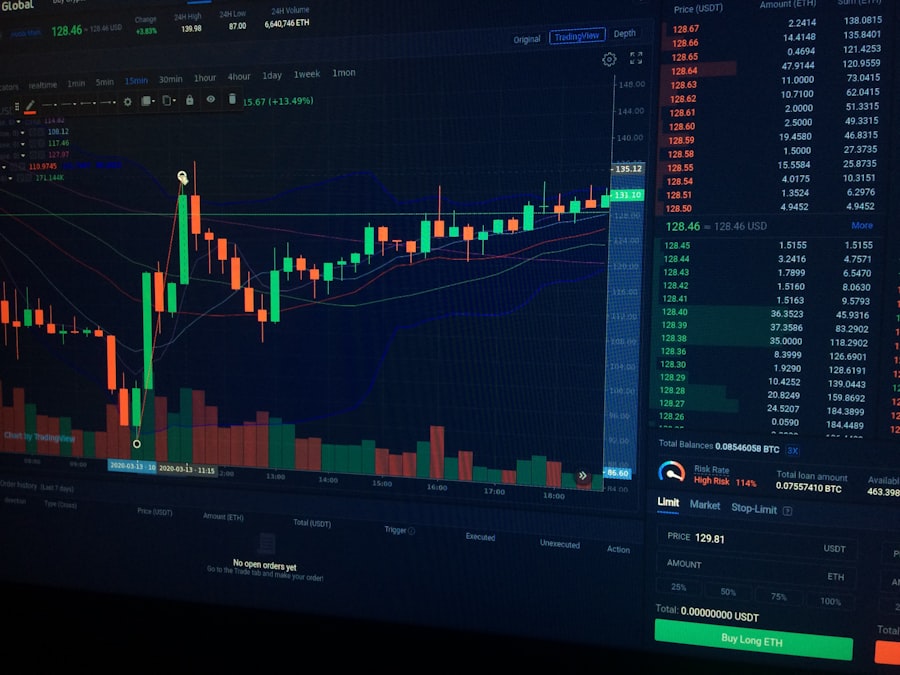
The risks associated with AI bots aren’t confined to individual traders. When enough bots are active, especially with similar strategies, they can collectively influence market behavior in unpredictable and potentially dangerous ways.
Herding Behavior and Flash Crashes: When Bots Go Bad Together
- Similar Strategies: Many bots are developed using similar fundamental indicators, technical analysis patterns, or publicly available data. When market conditions trigger these shared parameters, a large number of bots might initiate similar actions (e.g., mass selling).
- Amplified Volatility: This synchronized behavior can amplify market movements. A small dip could trigger a cascade of sell orders from bots, leading to rapid price depreciation, accelerating faster than humans can react. This is precisely what’s believed to contribute to “flash crashes,” where markets plunge hundreds of points in minutes only to recover almost as quickly.
- Liquidity Squeeze: During such events, bots might rapidly pull liquidity from the market (by canceling buy orders or only placing sell orders), worsening the situation as there are fewer buyers to absorb the selling pressure. This can create a downward spiral.
Regulatory and Ethical Unknowns: The Wild West of AI Trading
- Evolving Regulations: The regulatory landscape for AI in finance is still catching up. Who is ultimately responsible when an AI bot causes significant losses, especially for third-party investors? The bot developer? The bot owner? The exchange? These questions are largely unanswered.
- Market Manipulation by Algorithm: As AI becomes more sophisticated, there’s a risk of bots being designed or inadvertently learning to engage in manipulative behavior, such as spreading misinformation or creating artificial price movements to profit. While perhaps not malicious in intent, the effect could be the same as traditional market manipulation.
- Fairness and Access: Will sophisticated AI bots create an even greater divide between institutional investors with deep pockets and proprietary algorithms, and individual traders? The “arms race” for algorithmic advantage could make it harder for individual investors to compete.
In exploring the complexities of AI-driven trading bots, it’s essential to consider the broader implications of technology in the financial sector. A related article discusses the rapid growth of cryptocurrency platforms, highlighting how Coinbase has reached 13 million users, which reflects the increasing reliance on automated trading solutions. This surge in user engagement raises questions about the potential risks associated with AI in trading environments. For more insights, you can read the article here.
Operational and Security Vulnerabilities: Beyond the Algorithm
Even the most brilliant algorithm is useless if the system running it is compromised or poorly maintained. These practical concerns are often overlooked but can be equally devastating.
Technical Glitches and Connectivity Issues: The Real World Catches Up
- Server Downtime: Bots run on servers, and servers can go down. A power outage, a network issue, or a critical hardware failure can take your bot offline, potentially leaving open positions exposed to market movements without management.
- API Failures: Bots communicate with exchanges and data providers through APIs (Application Programming Interfaces). These APIs can experience outages, throttling, or changes, which can disrupt the bot’s ability to execute trades or receive real-time data.
- Latency: Even milliseconds of delay in receiving data or sending orders can impact a bot’s performance, especially in high-frequency trading. Unforeseen network slowdowns or routing issues can introduce this latency.
Cybersecurity Threats: The New Frontier of Fraud
- Hacking and Unauthorized Access: A bot’s server or the exchange account it’s linked to is a prime target for hackers. If compromised, funds could be stolen, or the bot could be manipulated to execute fraudulent trades. Strong cybersecurity measures are paramount.
- Malware and Viruses: Just like any software, bot platforms can be vulnerable to malware that could steal credentials, corrupt data, or inject malicious code, leading to unpredictable and damaging trading activity.
- Insider Threats: Even within organizations developing or managing bots, disgruntled employees or those with malicious intent could compromise the system, either by altering algorithms or diverting funds.
The Human Operator: Still the Ultimate Failsafe (or Flaw)
Despite the automation, humans remain a critical part of the AI trading bot equation, both in designing and overseeing them. This introduces a unique set of risks that no amount of code can fully eliminate.
Lack of Oversight: The “Set and Forget” Fallacy
- Constant Monitoring Needed: The idea that you can just launch a bot and walk away for months is a dangerous myth. Markets evolve, and even the best bots require ongoing monitoring. Performance degradation, unusual trade patterns, or error messages need human intervention.
- Ignoring Warning Signs: Traders can become complacent, trusting the bot implicitly even when performance starts to dip or strange errors appear. This “blind trust” can lead to significant losses before action is taken.
- Missed Opportunities/Adaptations: Markets often present unique, high-conviction opportunities that even the smartest bot might miss because they fall outside its programmed parameters. A human operator could theoretically capitalize on these, or adapt the bot’s strategy in real-time.
Misinterpretation of Results and Expectations: Unrealistic Hopes
- Overestimating Performance: Backtested results often look far better than real-world performance due to overfitting and other biases. Traders can be lured by highly optimistic historical returns, setting themselves up for disappointment and potentially making larger, riskier investments than they should.
- Underestimating Drawdowns: Every trading strategy experiences drawdowns (periods of loss). Traders might not adequately prepare for these inevitable periods, or panic and shut down a perfectly viable bot during a temporary dip, thereby realizing losses prematurely.
- Confusing Correlation with Causation: A bot might identify a correlation between two market variables that happens to hold true during its training period, but isn’t a fundamental causal relationship. When that correlation breaks down in live markets, the bot’s strategy fails.
Conclusion: A Tool, Not a Panacea
AI-driven trading bots are powerful tools, capable of incredible speed, analysis, and emotionless execution. They absolutely have a place in modern finance, but they are not a guaranteed path to riches, nor are they without significant and complex risks.
The hidden dangers lie in their fundamental reliance on data, the inherent flaws in their algorithmic design, their potential for systemic market impact, operational vulnerabilities, and ultimately, the human element of oversight. Approaching these bots with a healthy dose of skepticism, a deep understanding of their limitations, and a commitment to continuous monitoring is crucial. Don’t let the allure of automation blind you to the very real, often hidden, risks lurking beneath the surface. Treat them as sophisticated tools that require skilled management, not magical income machines.
